
Thinking about tinting your vehicle’s windows in 2026? Before you choose that sleek, dark finish, there’s one important question to answer:
Is your window tint legal in your state?
Window tint laws vary across the United States, and what’s perfectly legal in one state could result in fines in another. Whether you’re upgrading your daily driver, customizing your truck, or protecting your interior from UV damage, understanding state-by-state window tint laws is essential.
In this comprehensive 2026 guide, we’ll explain how tint laws work, why they differ, and what you need to know to stay compliant while still enjoying the many benefits of professional window tinting.
Why Window Tint Laws Matter
Window tint laws are designed primarily for:
- Road safety
- Law enforcement visibility
- Driver awareness
- Nighttime driving safety
- Accident prevention
Each state determines its own regulations, which means there is no universal federal standard for vehicle window tint darkness.
If you move, travel frequently, or purchase a vehicle from another state, your tint may no longer comply with local laws.
Understanding VLT: The Key to Tint Compliance
The most important concept in tint law is Visible Light Transmission (VLT).
VLT measures the percentage of visible light that passes through your window glass and tint film.
- Higher VLT % = Lighter tint
- Lower VLT % = Darker tint
For example:
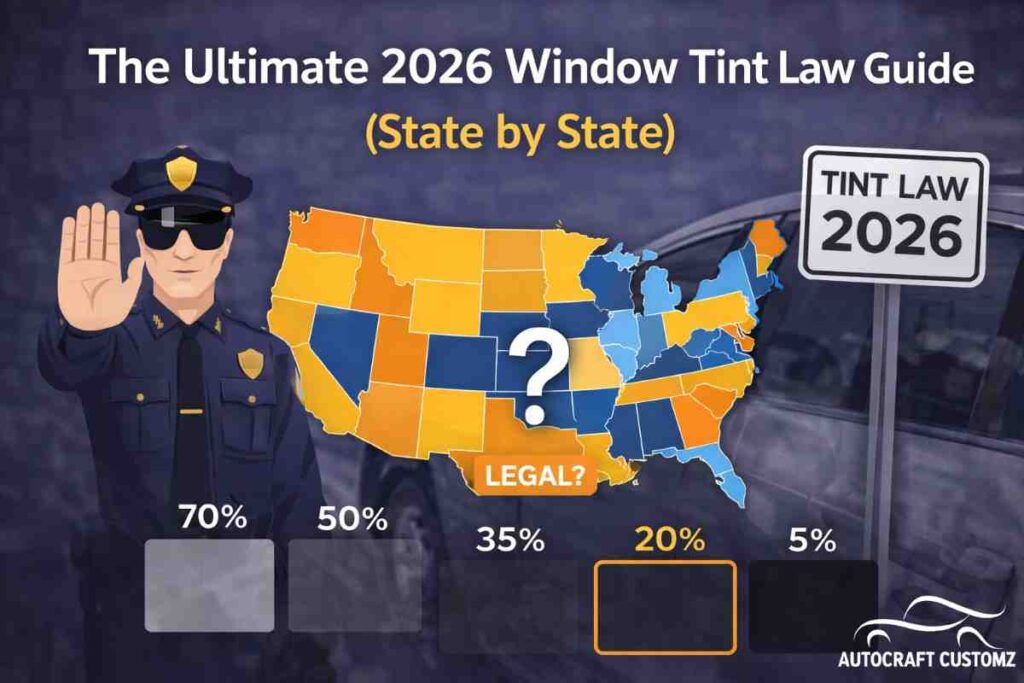
- 70% VLT → Very light tint
- 50% VLT → Light tint
- 35% VLT → Moderate tint
- 25% VLT → Dark tint
- 20% VLT → Very dark
- 5% VLT → Limo tint
If your state requires 35% VLT on front windows, installing 20% would be illegal.
General Window Tint Law Trends (2026)
While specific rules vary, most states follow similar patterns:
🚗 Front Side Windows
Usually restricted between 24% and 50% VLT.
🚗 Rear Side Windows
Often more flexible, especially for SUVs and trucks.
🚗 Rear Window
May allow darker tint if dual side mirrors are present.
🚗 Windshield
Typically limited to a non-reflective strip on the top 4–6 inches.
State-by-State Examples (2026 Overview)
Here’s how tint laws compare across different regions:
West Coast
California
- 70% VLT required on front side windows
- Rear windows may be darker
- Strict enforcement statewide
Washington
- More than 24% VLT required on most windows
- Windshield tint limited to top 6 inches
- SUVs/trucks may tint rear windows darker
Oregon
- 35% VLT required on front side windows
- Rear windows more flexible
Southwest
Arizona
- 33% VLT on front side windows
- Rear windows may be any darkness
Nevada
- 35% VLT front
- Rear windows more lenient
Hotter states often allow darker tint due to intense sunlight and heat exposure.
Southern States
Texas
- 25% VLT on front side windows
- Rear windows may be darker
Florida
- 28% VLT front
- 15% rear windows
Southern states generally permit darker tint compared to northern states.
Northeast
New York
- 70% VLT required front and rear side windows
- Strict annual inspection compliance
New Jersey
- No tint allowed on front side windows
- Rear windows permitted
Northeastern states tend to have stricter regulations.
Visual Comparison: How Dark Is Legal Tint?
Here’s how typical legal tint levels compare visually:
- 70% VLT – Nearly clear
- 35% VLT – Noticeable but moderate
- 25% VLT – Dark and bold
- 5% VLT – Limo tint (illegal for front windows in most states)
Reflectivity Rules Across States
In addition to VLT, many states regulate reflectiveness:
- Usually capped between 25–35% reflectivity
- Mirror-like finishes often restricted
- Metallic films may face additional limits
Reflective tint reduces glare but can create hazards for other drivers if too intense.
Medical Exemptions (State Dependent)
Many states offer medical exemptions for drivers with:
- Lupus
- Severe photosensitivity
- Skin cancer conditions
Requirements typically include:
- Physician documentation
- State-issued approval
- Carrying exemption paperwork in the vehicle
Approval does not always mean unlimited darkness. Each state sets maximum allowable levels even under exemption.
Does Factory Tint Count Toward Legal Limits?
Yes.
Most vehicles come with factory-tinted glass (usually around 70–80% VLT). Adding aftermarket tint reduces total VLT.
For example:
- Factory glass at 75%
- Add 35% film
- Final result may fall below 35% legal requirement
Professional installers measure combined VLT to ensure compliance.
Penalties for Illegal Tint (2026)
If your tint violates state law, you may face:
- Traffic stops
- Tint meter inspection
- Fix-it tickets
- Fines
- Mandatory removal
- Failed vehicle inspections
In some states, repeated violations can result in higher penalties.
Why Professional Installation Matters
DIY tint kits often cause:
- Bubbling
- Peeling
- Purple discoloration
- Incorrect VLT measurement
- Legal non-compliance
Professional tint shops use digital meters to measure final VLT and ensure your vehicle meets state regulations.
Benefits of Legal Window Tint
Staying compliant doesn’t mean sacrificing performance. Even within legal limits, tint provides:
☀️ UV Protection
Blocks up to 99% of harmful UV rays.
🌡 Heat Reduction
Ceramic films dramatically reduce cabin temperatures.
🌧 Glare Reduction
Improves comfort during bright or rainy conditions.
🔒 Increased Privacy
Protects valuables from view.
💺 Interior Protection
Prevents fading and cracking.
How to Ensure Your Tint Is Legal in 2026
- Check your state’s latest tint regulations.
- Measure existing VLT with a tint meter.
- Account for factory glass tint.
- Choose high-quality film.
- Work with a professional installer.
If you’re relocating, recheck laws immediately — compliance varies widely between states.
Final Thoughts: Stay Stylish, Stay Legal
Window tint is one of the most impactful upgrades you can make to your vehicle. But with laws varying state by state in 2025, doing your research is essential.
Whether you’re in Washington or anywhere else in the U.S., knowing your local VLT limits ensures you avoid tickets while still enjoying all the benefits tint provides.
The key takeaway?
Dark doesn’t always mean legal — and legal doesn’t mean sacrificing style.
Trust the Professionals
At AutoCraft Customz, we specialize in high-quality, law-compliant window tint installation. Our team stays up-to-date on state regulations and uses precision tools to ensure your tint meets legal standards.
If you’re considering tinting your vehicle in 2026, contact AutoCraft Customz today and let us help you achieve the perfect balance of protection, performance, and compliance.