
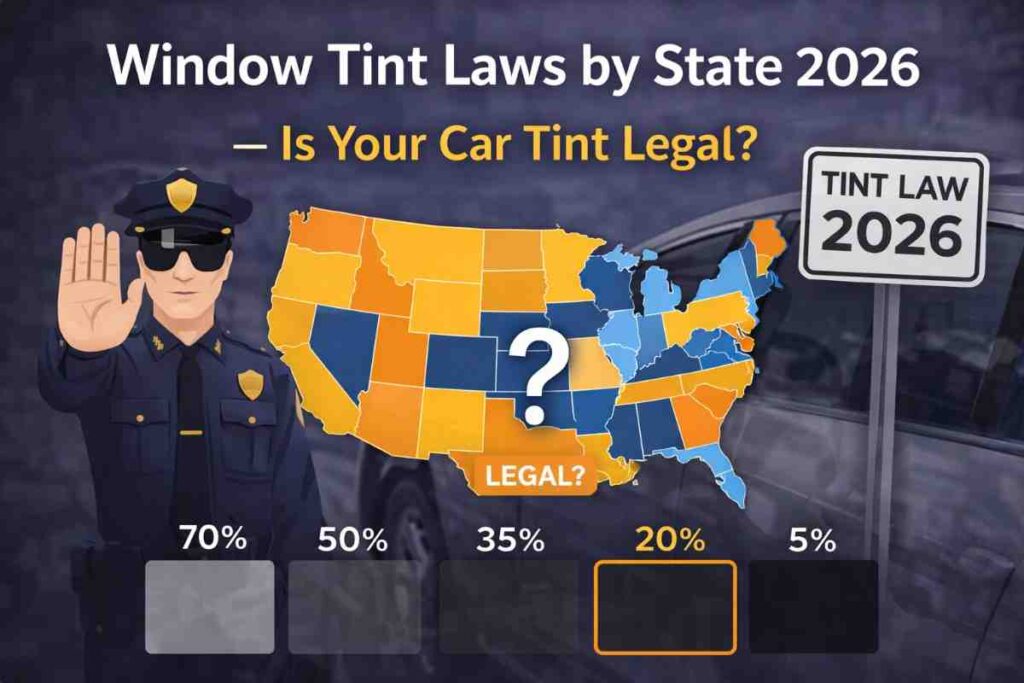
Window tint is one of the most popular vehicle upgrades in the United States. It improves privacy, reduces heat, blocks harmful UV rays, and gives your car a sleek, customized appearance. But before you go darker, there’s one critical question you need answered:
Is your car tint legal in your state in 2026?
Window tint laws vary significantly across the country. What’s perfectly legal in one state could earn you a citation in another. In this comprehensive 2026 guide, we’ll break down how tint laws work, why they differ by state, and what you need to check before installing window film.
If you’re a driver in Washington or anywhere else in the U.S., this guide will help you stay compliant and avoid costly mistakes.
Understanding Window Tint Laws in 2026
Window tint laws are regulated at the state level, not federally. That means every state sets its own standards for:
- Visible Light Transmission (VLT)
- Reflectivity limits
- Windshield tint rules
- Front vs. rear window restrictions
- Medical exemptions
Before comparing states, let’s clarify the most important term: VLT.
What Is VLT (Visible Light Transmission)?
Visible Light Transmission (VLT) refers to the percentage of visible light allowed to pass through your window glass and tint film.
- Higher VLT % = Lighter tint
- Lower VLT % = Darker tint
For example:
- 70% VLT → Very light
- 50% VLT → Light
- 35% VLT → Medium
- 24% VLT → Dark
- 20% VLT → Very dark
- 5% VLT → Limo tint
If your state requires 35% VLT on front windows, installing 20% would be illegal.
Why Do Tint Laws Vary by State?
Tint laws are designed around:
- Road safety
- Law enforcement visibility
- Climate conditions
- Accident prevention
- Nighttime driving safety
States with hotter climates may allow darker tint due to heat concerns, while others maintain stricter visibility requirements.
General Tint Law Trends Across the U.S. (2026)
While exact numbers vary, most states follow similar patterns:
🚗 Front Side Windows
Usually restricted between 24% and 50% VLT depending on the state.
🚗 Rear Side Windows
Often more flexible, especially for SUVs and trucks.
🚗 Rear Window
Commonly allowed darker tint if the vehicle has side mirrors.
🚗 Windshield
Typically limited to a non-reflective strip on the top 4–6 inches.
States with Stricter Tint Laws
Some states are known for tighter restrictions on front windows:
- California – 70% VLT required on front side windows
- New York – 70% VLT required
- New Jersey – No tint allowed on front side windows
Drivers relocating to these states often discover their previously legal tint is no longer compliant.
States with More Flexible Tint Laws
Other states allow darker tint:
- Texas – 25% VLT on front side windows
- Florida – 28% VLT on front side windows
- Arizona – 33% VLT front, darker allowed in rear
These states often account for intense sunlight and heat exposure.
Washington State Tint Laws (2026 Example)
If you’re in Washington, the current legal limits for passenger vehicles include:
- Front side windows: Must allow more than 24% VLT
- Back side windows: Must allow more than 24% VLT
- Rear window: Must allow more than 24% VLT
- Windshield: Non-reflective tint on top 6 inches only
SUVs and trucks may apply darker tint to rear windows, but front windows must remain compliant.
This makes Washington moderately strict compared to hotter southern states.
Visual Comparison: How Dark Is Legal Tint?
Here’s how common legal tint levels compare visually:
- 70% VLT – Very light, almost clear
- 35% VLT – Noticeable but balanced
- 24% VLT – Dark and bold (legal in some states)
- 5% VLT – Limo tint (illegal for front windows in most states)
Always verify your specific state’s legal threshold before choosing a shade.
Reflectivity Laws
In addition to VLT, most states regulate reflectivity:
- Typically limited to 25–35% reflectiveness
- Mirror-like finishes often restricted
- Metallic films may be regulated
Reflective tint reduces glare but can create visibility hazards for other drivers.
Medical Exemptions by State
Many states offer medical exemptions for individuals with:
- Lupus
- Photosensitivity disorders
- Skin cancer concerns
Requirements vary by state and typically involve:
- Physician documentation
- State-issued approval
- Carrying exemption paperwork in the vehicle
Never assume medical exemptions automatically allow extremely dark tint. Limits still apply.
What Happens If Your Tint Is Illegal?
Penalties vary by state but may include:
- Traffic stops
- Tint meter testing
- Fix-it tickets
- Fines ranging from $50 to several hundred dollars
- Mandatory tint removal
- Vehicle inspection requirements
In some states, repeat violations can lead to higher penalties.
Does Factory Tint Count?
Yes.
Most vehicles come with factory-installed tint in the glass (usually 70–80% VLT). When aftermarket film is added, total VLT decreases.
For example:
- Factory glass at 75% VLT
- Add 35% film
- Final measurement may fall below legal limits
Professional installers calculate combined VLT to ensure compliance.
Why Professional Installation Is Critical in 2026
DIY tint kits often lead to:
- Bubbling
- Peeling
- Purple fading
- Incorrect VLT measurement
- Legal violations
Professional tint shops use digital meters to confirm compliance and apply high-quality films that last for years.
Benefits of Staying Legal
Choosing compliant window tint offers major advantages:
✅ Avoid Tickets
Stay stress-free during traffic stops.
✅ Safer Night Driving
Proper visibility reduces accident risk.
✅ Better Resale Value
Buyers prefer vehicles without legal complications.
✅ Insurance Compliance
Illegal modifications may impact claims.
How to Check If Your Tint Is Legal
Before installing or if you’re unsure:
- Check your state’s 2026 tint laws.
- Measure existing VLT with a tint meter.
- Account for factory glass tint.
- Choose a professional installer.
- Avoid stacking multiple films.
If you’re moving between states, re-check regulations — compliance in one state does not guarantee legality in another.
Final Thoughts: Is Your Car Tint Legal in 2026?
Window tint laws differ widely across the U.S., and enforcement remains active in 2026. While darker tint offers aesthetic appeal and privacy, exceeding your state’s limits can lead to fines and removal orders.
If you live in Washington or plan to tint your vehicle there, remember that 24% VLT is the legal minimum for most passenger cars.
The smartest approach? Choose a professional installer who understands state regulations and measures your tint accurately.
Upgrade Your Vehicle the Right Way
At AutoCraft Customz, we help drivers stay compliant while achieving the perfect balance of style, protection, and performance. Our team ensures your tint meets legal standards and delivers long-lasting results.
Before you tint your windows in 2026, make sure your car is legal — and let the professionals handle it right the first time.