
Window tint is one of the most popular upgrades for cars, trucks, and SUVs across the United States. It improves privacy, enhances style, reduces glare, and blocks harmful UV rays. But before you choose your preferred shade, there’s one important question to answer:
Is your window tint legal in your state?
Window tint laws vary significantly from state to state. What’s perfectly acceptable in one state could lead to fines or removal orders in another. In this ultimate guide, we break down how tint laws work, provide examples from different regions, and explain how to ensure your vehicle stays compliant in 2026.
If you’re planning to tint your vehicle — especially in Washington — this guide will help you make an informed decision.
Understanding Window Tint Laws
Window tint laws are regulated at the state level. Each state determines:
- The minimum Visible Light Transmission (VLT)
- Restrictions on windshield tint
- Reflectivity limits
- Rules for front vs rear windows
- Medical exemption policies
Because there is no federal standard for vehicle tint darkness, it’s essential to verify the rules specific to your state.
What Is VLT (Visible Light Transmission)?
The most important measurement in window tint law is VLT.
Visible Light Transmission refers to the percentage of visible light that passes through your glass and tint film.
- Higher VLT % = Lighter tint
- Lower VLT % = Darker tint
For example:
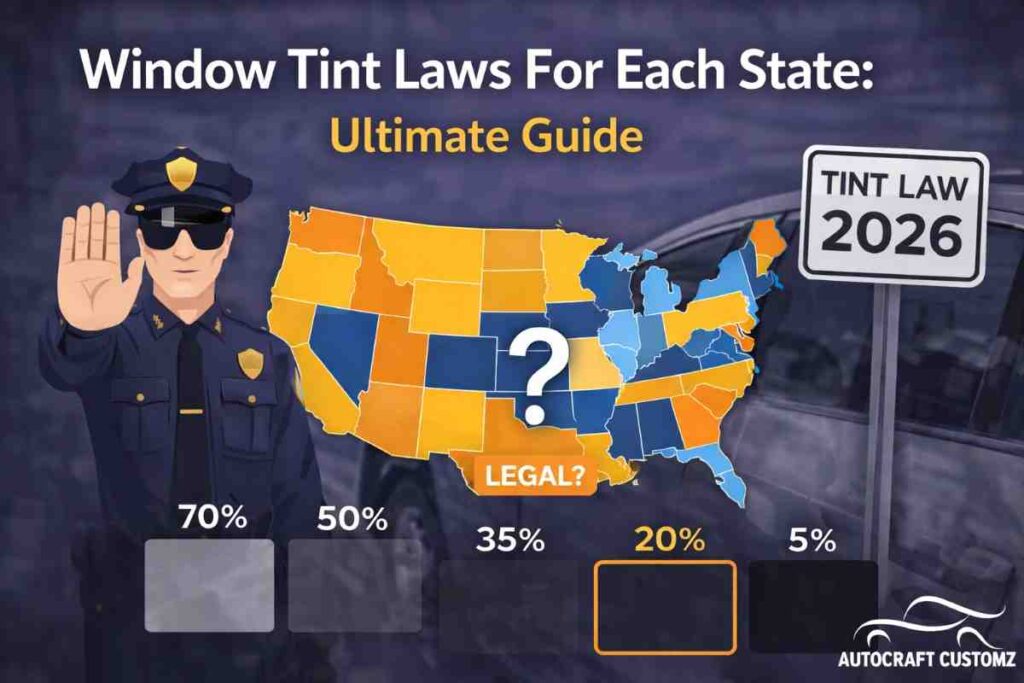
- 70% VLT → Very light
- 50% VLT → Light
- 35% VLT → Moderate
- 25% VLT → Dark
- 20% VLT → Very dark
- 5% VLT → Limo tint
If your state requires 35% VLT for front windows, installing 20% would be illegal.
General Tint Law Patterns Across the U.S.
While each state differs, most follow similar structures:
🚗 Front Side Windows
Usually restricted between 24% and 50% VLT.
🚗 Rear Side Windows
Often more flexible, especially for SUVs and trucks.
🚗 Rear Window
May allow darker tint if side mirrors are present.
🚗 Windshield
Typically limited to a non-reflective strip along the top 4–6 inches.
West Coast Tint Laws
California
- 70% VLT required on front side windows
- Rear windows can be darker
- Strict enforcement and inspection compliance
Washington
- More than 24% VLT required on most windows
- Windshield tint limited to top 6 inches
- SUVs and trucks may tint rear windows darker
Oregon
- 35% VLT required on front side windows
- Rear windows more flexible
West Coast states generally maintain moderate to strict tint limits.
Southern States Tint Laws
Southern states often allow darker tint due to stronger sunlight and heat.
Texas
- 25% VLT front windows
- Rear windows may be darker
Florida
- 28% VLT front
- 15% rear windows
Georgia
- 32% VLT on most windows
Hot climates often justify slightly darker legal limits.
Southwest Tint Laws
Arizona
- 33% VLT front
- Rear windows can be any darkness
Nevada
- 35% VLT front
- Flexible rear tint options
These states typically allow darker tint for rear windows.
Northeast Tint Laws
Northeastern states often have stricter standards.
New York
- 70% VLT required front and rear side windows
- Strict annual inspection rules
New Jersey
- No tint permitted on front side windows
- Rear windows allowed
Drivers relocating from southern states to the Northeast often face compliance issues.
Visual Comparison of Common Tint Levels
Here’s how popular tint levels compare visually:
- 70% VLT – Almost clear
- 35% VLT – Noticeable but balanced
- 25% VLT – Dark, aggressive appearance
- 5% VLT – Limo tint (illegal for front windows in most states)
Always verify legal limits before selecting your shade.
Reflectivity Laws by State
Many states regulate how reflective tint can be:
- Typically capped between 25% and 35% reflectiveness
- Mirror-like finishes often restricted
- Metallic films sometimes limited
Reflective tint reduces glare but can create hazards for other drivers.
Medical Exemptions
Most states offer medical exemptions for individuals with qualifying conditions such as:
- Lupus
- Photosensitivity disorders
- Skin cancer risk
Medical exemption requirements usually include:
- Physician certification
- State approval
- Carrying documentation in the vehicle
Exemptions do not necessarily allow unlimited darkness — maximum levels still apply.
Does Factory Tint Count?
Yes.
Most vehicles come with factory glass tint (typically 70–80% VLT). Adding aftermarket film reduces overall VLT.
For example:
- Factory glass at 75%
- Add 35% film
- Final measurement may drop below 35%
Professional installers measure combined VLT to ensure compliance.
Penalties for Illegal Window Tint
If your tint exceeds legal limits, you may face:
- Traffic stops
- Tint meter testing
- Fix-it tickets
- Fines
- Mandatory removal
- Failed inspections
Repeated violations can lead to higher penalties.
Why Professional Installation Matters
DIY tint kits often result in:
- Bubbling
- Peeling
- Purple discoloration
- Incorrect VLT levels
- Legal violations
Professional shops use calibrated tint meters and high-quality film to guarantee compliance and longevity.
Benefits of Legal Window Tint
Even within legal limits, tint provides powerful advantages:
☀️ UV Protection
Blocks up to 99% of harmful UV rays.
🌡 Heat Reduction
Ceramic tint reduces cabin temperature dramatically.
🌧 Glare Reduction
Improves driving comfort during bright or rainy conditions.
🔒 Increased Privacy
Protects valuables from view.
💺 Interior Preservation
Prevents fading and cracking of interior materials.
How to Ensure Compliance in 2026
- Check your state’s tint laws before installation.
- Account for factory glass tint.
- Choose high-quality film.
- Measure final VLT with a tint meter.
- Work with experienced professionals.
If you move to another state, re-check regulations immediately.
Final Thoughts: Stay Legal, Stay Protected
Window tint laws vary widely across the United States. Before upgrading your vehicle, verify your state’s legal VLT limits and reflectivity rules.
If you’re located in Washington, remember that most passenger vehicles must allow more than 24% of light through side and rear windows.
The key takeaway?
Legal tint still delivers powerful benefits — you don’t have to go illegal to go dark.
Get Professional, Compliant Tint Installation
At AutoCraft Customz, we specialize in high-quality, law-compliant window tint installation. Our team stays up to date with state regulations and ensures precise VLT measurement for every vehicle.
If you’re ready to enhance your car’s comfort, protection, and style, contact AutoCraft Customz today.
Drive cool. Drive protected. Drive compliant.