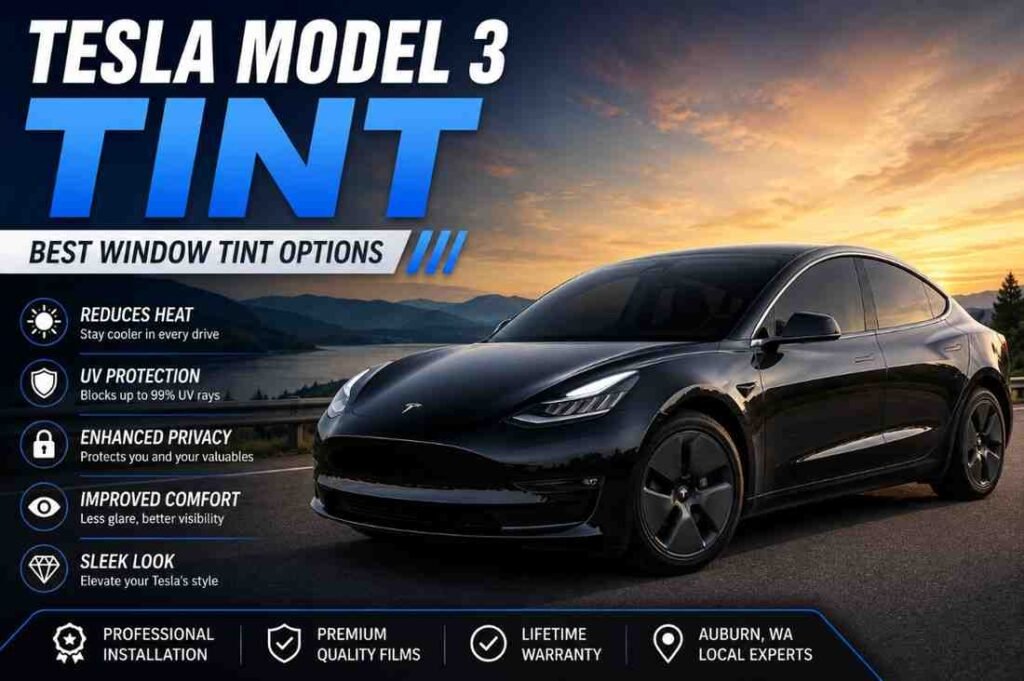
The Tesla Model 3 is one of the most popular electric vehicles on the road today—but it also comes with a common complaint:
The cabin can get hot fast, especially in sunny or summer conditions.
Because of its large glass areas and panoramic roof design, heat buildup and UV exposure are real concerns for Tesla owners. This is where professional window tinting makes a major difference.
A high-quality tint—especially ceramic window tint—can significantly improve comfort, reduce interior heat, and protect your Tesla’s interior materials from long-term sun damage.
Why Tinting a Tesla Model 3 Matters
Tesla vehicles are built with large glass surfaces to enhance visibility and modern aesthetics. However, that also means:
- More sunlight enters the cabin
- Higher interior temperatures
- Increased UV exposure
- Faster fading of interior materials
Window tint helps solve all of these issues by blocking heat and harmful UV rays before they enter the vehicle.
Best Window Tint for Tesla Model 3
Not all window tints are created equal. Tesla owners typically choose between three types:
1. Dyed Window Tint (Basic Option)
- Affordable
- Basic privacy
- Limited heat rejection
- Can fade over time
Best for: Budget-focused owners
2. Carbon Tint (Mid-Range Option)
- Better heat rejection than dyed tint
- No signal interference
- More durable than dyed film
- Matte finish look
Best for: Balanced performance and cost
3. Ceramic Tint (Premium Option ⭐ Recommended)
Ceramic tint is the top choice for Tesla Model 3 owners.
It offers:
- Maximum heat rejection
- Superior UV protection
- No signal interference
- Long-lasting clarity
- Reduced glare
- Improved driving comfort
Unlike traditional films, ceramic tint blocks infrared heat without needing to be extremely dark, which is ideal for Tesla owners who want visibility + performance.
If you’re considering premium protection for your vehicle overall, you may also want to read: 👉 Is Ceramic Tint Worth It?
Benefits of Tinting a Tesla Model 3
1. Cooler Cabin Temperature
If heat reduction is your top priority, choosing the right film makes a noticeable difference in everyday comfort.
This means:
- Faster cooling when AC starts
- Less strain on climate control system
- More comfortable driving experience
2. UV Protection
High-quality tint blocks up to 99% of harmful UV rays, helping protect:
- Dashboard
- Seats
- Steering wheel
- Interior trim
This reduces fading, cracking, and long-term wear.
3. Glare Reduction
Driving during sunrise or sunset becomes much safer and more comfortable with reduced glare from sunlight and headlights.
4. Enhanced Privacy
Tinting improves privacy without affecting the modern Tesla look.
5. Interior Protection for Long-Term Ownership
Many Tesla owners keep their vehicles for years. Tint helps preserve the interior condition and maintain resale value.
Tesla Model 3 Tint Cost (2026)
Pricing depends on the type of film and coverage level.
Typical U.S. pricing:
| Package | Estimated Cost |
| Front Windows Only | $150–$300 |
| Full Side Windows | $300–$600 |
| Full Car (Side + Rear) | $400–$900 |
| Premium Ceramic Full Tint | $600–$1,200+ |
Prices vary based on film quality, installer expertise, and warranty coverage.
Do You Need Tint on a Tesla Model 3?
Yes—for most owners, it’s highly recommended.
You should consider tint if you:
- Drive daily
- Park outdoors
- Live in sunny or hot conditions
- Want better interior protection
- Want improved driving comfort
Given Tesla’s large glass surfaces, tinting is one of the most effective upgrades you can make.
Ceramic Tint vs Regular Tint on Tesla Model 3
| Feature | Regular Tint | Ceramic Tint |
| Heat Rejection | Moderate | Excellent |
| UV Protection | Good | Excellent |
| Signal Interference | None | None |
| Durability | Moderate | High |
| Visibility | Varies | Excellent |
| Comfort | Basic | Premium |
Ceramic tint clearly delivers the best performance for Tesla owners.
Should You Tint the Roof of a Tesla Model 3?
Tesla Model 3 comes with a large glass roof that can contribute to heat buildup.
Many owners choose:
- Windshield strip tint
- Roof ceramic tint (clear heat rejection film)
- Full ceramic package for maximum comfort
A heat-rejecting ceramic film on the roof can make a noticeable difference in cabin temperature.
Can You Combine Tint with Ceramic Coating or PPF?
Yes—and many Tesla owners do.
A complete protection setup often includes:
- Ceramic Tint → Controls heat and UV inside the cabin
- Paint Protection Film (PPF) → Protects exterior paint from chips
- Ceramic Coating → Adds gloss and makes cleaning easier
Final Thoughts
Tinting your Tesla Model 3 is one of the most practical upgrades you can make. It improves comfort, reduces heat, protects the interior, and enhances the overall driving experience—especially when paired with ceramic or carbon-based films.
For Tesla owners in Washington, ceramic tint is the most recommended option due to its balance of performance, clarity, and durability.
Upgrade Your Tesla Model 3 with Professional Tinting at AutoCraft Customz
At AutoCraft Customz, we specialize in premium window tint installations for Tesla vehicles, including the Model 3, Model Y, Model S, and Model X.
We proudly serve Auburn, Kent, Federal Way, Renton, Covington, Tacoma, and surrounding areas, offering precision installation and high-performance ceramic tint solutions designed for comfort and protection.
Request a free Tesla window tint estimate, and we’ll help you choose the ideal tint package for your Model 3
Frequently Asked Questions
Is tinting a Tesla Model 3 worth it?
Yes. It improves comfort, reduces heat, protects interior materials, and enhances driving experience—especially in sunny climates.
What is the best tint percentage for Tesla Model 3?
Common choices include:
- 20%–35% for sides (balance of privacy and visibility)
- 70% ceramic for windshield (heat rejection without darkening)
Will tint affect Tesla sensors or cameras?
No. High-quality ceramic tint does not interfere with sensors, cameras, or electronics.
How long does Tesla window tint last?
Premium ceramic tint can last 10+ years with proper care. Learn more about how long window tint lasts and the factors that affect its lifespan.