
One of the most common questions vehicle owners ask before investing in window tint is:
“How long does window tint last?”
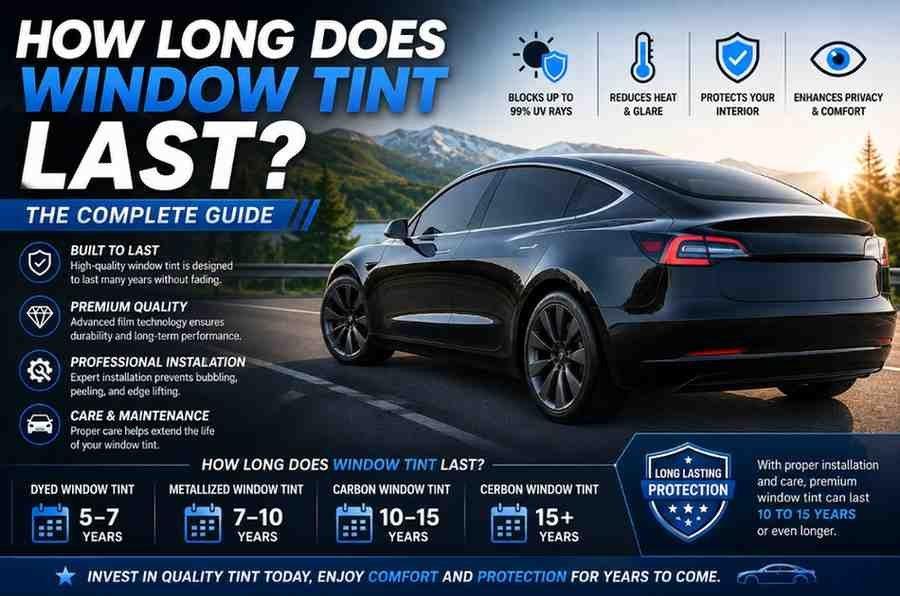
The answer depends on several factors, including the type of window film, installation quality, climate, and how well the tint is maintained. In general:
- Dyed window tint: 3–5 years
- Carbon window tint: 5–10 years
- Ceramic window tint: 10 years or more, with many premium films backed by lifetime warranties
Choosing a high-quality film and having it installed professionally can significantly extend the lifespan of your window tint while maintaining its appearance and performance.
In this guide, we’ll explain what affects window tint longevity, how to recognize when it’s time for a replacement, and how to maximize the life of your investment.
What Determines How Long Window Tint Lasts?
Not all window tint is created equal.
Several factors influence how long your window film will continue to perform effectively.
1. Type of Window Film
The biggest factor affecting longevity is the type of film installed.
Dyed Window Tint
Dyed window tint is the most affordable option.
Average lifespan: 3–5 years
While it improves privacy and appearance, dyed film is more likely to:
- Fade
- Turn purple
- Bubble
- Lose heat rejection over time
It’s often chosen for budget-friendly installations but generally has the shortest service life.
Carbon Window Tint
Carbon tint offers better durability than dyed film.
Average lifespan: 5–10 years
Benefits include:
- Better heat rejection
- Excellent fade resistance
- Rich matte appearance
- Greater durability
Carbon film is a strong mid-range option for drivers seeking improved longevity without the premium price of ceramic tint.
Ceramic Window Tint
Ceramic window tint is widely considered the most durable automotive window film and is often the best long-term investment for vehicle owners.
Average lifespan: 10+ years
Premium ceramic films are engineered to provide:
- Outstanding heat rejection
- Up to 99% UV protection
- Excellent optical clarity
- Superior resistance to fading and discoloration
If maximizing heat rejection is your priority, choosing the right film can make a significant difference in driving comfort. Many premium ceramic products are supported by long-term or lifetime manufacturer warranties when professionally installed.
Does Professional Installation Make a Difference?
Absolutely.
Even the highest-quality window film can fail prematurely if it’s installed incorrectly.
Professional installation helps ensure:
- Proper surface preparation
- Accurate film alignment
- Bubble-free application
- Secure edge sealing
- Correct curing
Poor installation is one of the most common reasons window tint begins peeling or bubbling earlier than expected.
How Climate Affects Window Tint Lifespan
Your local climate also plays an important role.
Vehicles exposed to:
- Intense sunlight
- High UV levels
- Extreme heat
- Frequent temperature changes
may experience faster wear than vehicles kept in garages or shaded parking.
Washington’s climate is generally less demanding than very hot southern states, but UV exposure and summer heat can still affect lower-quality films over time.
Signs Your Window Tint Needs Replacing
Eventually, every window film reaches the end of its service life.
Common signs include:
- Bubbling: Air pockets beneath the film often indicate adhesive failure. Bubbling not only looks unattractive but also reduces visibility and performance.
- Purple or Faded Tint: Older dyed films commonly change color after years of UV exposure. Purple tint is one of the clearest indicators that replacement is needed.
- Peeling Edges: Tint lifting around the edges usually means the adhesive is breaking down. Once peeling begins, it typically spreads over time.
- Scratches: Deep scratches can reduce visibility and diminish the overall appearance of your vehicle.
- Reduced Heat Rejection: If your vehicle suddenly feels much hotter than before, your aging film may no longer perform as effectively as it once did.
How to Make Window Tint Last Longer
Proper care can significantly extend the lifespan of your window tint.
Wait Before Cleaning
After installation, allow the film to cure according to your installer’s recommendations before cleaning the windows.
Use Ammonia-Free Cleaners
Harsh chemicals containing ammonia can damage window film.
Instead, use:
- Microfiber cloths
- Mild soap solutions
- Tint-safe glass cleaners
Avoid Abrasive Tools
Never use:
- Razor blades
- Steel wool
- Abrasive scrub pads
These can scratch or damage the film.
Roll Windows Carefully
Immediately after installation, avoid rolling the windows down until the film has fully cured.
Your installer will advise how long to wait based on the film and weather conditions.
Park in Covered Areas When Possible
Reducing prolonged exposure to direct sunlight can help preserve both the tint and your vehicle’s interior.
Is Window Tint Covered by a Warranty?
Many premium window films include manufacturer warranties that may cover defects such as:
- Bubbling
- Peeling
- Delamination
- Excessive fading
- Adhesive failure
Coverage varies by manufacturer and product, so always ask about warranty details before installation.
Is Replacing Old Tint Worth It?
Yes.
Replacing deteriorated window tint offers several benefits:
- Improved appearance
- Better heat rejection
- Enhanced UV protection
- Increased driving comfort
- Better visibility
- Higher resale appeal
Modern ceramic window films often provide significantly better performance than older tint technologies.
Why Quality Window Tint Saves Money
Although premium window films cost more initially, they often provide better long-term value by:
- Lasting longer
- Reducing replacement frequency
- Protecting your vehicle’s interior
- Helping maintain a cooler cabin
- Improving overall comfort
In many cases, investing in quality film once is more economical than replacing inexpensive tint every few years.
Why Choose AutoCraft Customz?
At AutoCraft Customz, we install premium automotive window films designed to deliver lasting performance, comfort, and style.
Our professional installers provide:
- Precision installation
- Bubble-free finishes
- Premium ceramic, carbon, and dyed films
- Guidance on legal tint options
- High-quality workmanship
- Long-lasting results
Whether you’re tinting a new vehicle or replacing old, faded film, we’ll help you choose the best solution for your driving needs.
Final Thoughts
So, how long does window tint last? The answer depends on the quality of the film and the installation. While budget dyed films may last only a few years, premium ceramic window tint can continue performing for a decade or longer with proper care.
Choosing professional installation and high-quality materials not only improves your vehicle’s appearance but also provides lasting protection from heat, glare, and harmful UV rays.
If you’re looking for professional window tint installation in Auburn, WA, our team can help you choose the right film for your vehicle.
Frequently Asked Questions
How long does ceramic window tint last?
Premium ceramic window tint typically lasts 10 years or more, and many products are backed by lifetime warranties when professionally installed.
How long does dyed window tint last?
Most dyed window films last 3–5 years before fading, discoloration, or adhesive failure becomes noticeable.
Can window tint be replaced?
Yes. Professional installers can remove old window film and replace it with new tint without damaging the glass when the process is performed correctly.
Does window tint wear out?
Yes. Over time, exposure to UV rays, heat, and normal use can cause window film to fade, peel, bubble, or lose performance.
Is ceramic tint worth the higher price?
For many drivers, ceramic tint offers the best long-term value because of its durability, heat rejection, UV protection, and extended lifespan.