
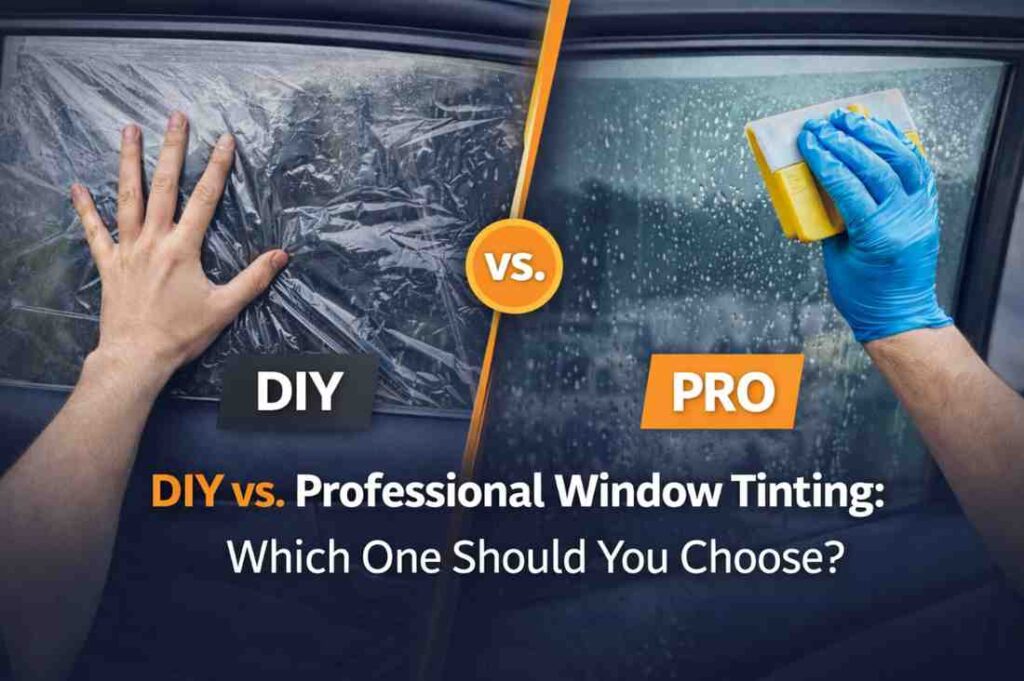
Window tinting is one of the most practical upgrades you can make to your vehicle. It improves privacy, blocks harmful UV rays, reduces glare, and helps keep your cabin cooler — especially during hot summers.
But when it’s time to tint your windows, one major question comes up:
👉 Should you choose a DIY tint kit or professional window tinting?
At first glance, DIY tinting looks cheaper. But is it really the better option long term?
In this complete 2026 guide, we’ll compare:
- Cost differences
- Film quality
- Installation difficulty
- Heat rejection performance
- Longevity
- Warranty coverage
- Legal compliance
- Long-term value
By the end, you’ll know exactly which option makes the most sense for your vehicle and budget.
What Is DIY Window Tinting?
DIY window tinting involves purchasing a tint kit online or from an auto store and installing it yourself.
Most DIY kits include:
- Pre-cut or universal tint film
- A small squeegee
- Basic installation instructions
DIY tint kits typically cost:
💲 $50 – $200 depending on quality
It sounds affordable — but price is only one piece of the puzzle.
What Is Professional Window Tinting?
Professional tinting involves certified installers applying premium-grade film in a controlled environment.
Professional installation typically includes:
✔ High-performance ceramic or carbon film
✔ Precision computer-cut patterns
✔ Dust-controlled workspace
✔ Clean edge finishing
✔ Warranty-backed installation
If you’re considering professional installation in Washington, you can explore options here:
👉 https://autocraftcustomz.com/car-window-tinting-auburn/
1️⃣ Cost: Short-Term Savings vs Long-Term Value
DIY Tint
- Lower upfront cost
- No labor fees
- But higher risk of mistakes
If you make errors (bubbles, creases, uneven cuts), you may need to:
- Buy new film
- Remove and redo installation
- Pay for professional correction
Professional Tint
- Higher upfront cost
- Includes labor and premium film
- Backed by warranty
While professional tint costs more initially, it often saves money long term by avoiding reinstallation and poor performance.
2️⃣ Film Quality: Big Performance Difference
This is where DIY and professional tint truly separate.
DIY Tint Film
Most DIY kits use:
- Basic dyed film
- Lower-grade adhesive
- Minimal infrared heat rejection
Common issues:
- Purple fading
- Bubbling within 1–3 years
- Peeling edges
- Limited UV blocking
Professional Tint Film
Professional installers use:
- Nano-ceramic film
- Carbon-based film
- Multi-layer optical technology
- Advanced adhesive systems
Premium films provide:
✔ 99% UV protection
✔ Significant infrared heat rejection
✔ No signal interference
✔ Long lifespan (7–15 years)
If you’re unsure which brands professionals trust, read this:
👉 https://autocraftcustomz.com/what-brand-window-tint-do-professionals-use/
3️⃣ Installation Difficulty: Harder Than It Looks
Many car owners underestimate how technical tint installation can be.
Common DIY challenges include:
- Dust trapped under film
- Air bubbles
- Creases in film
- Misaligned edges
- Over-trimming
- Damaging defroster lines
Even one speck of dust can create visible bubbling.
If you’ve experienced bubbling before, this guide explains why it happens:
👉 https://autocraftcustomz.com/what-causes-window-tint-bubbles-to-form-and-how-do-you-fix-them/
Professional installers work in:
✔ Controlled environments
✔ Proper lighting
✔ Clean preparation areas
✔ Using specialized tools
The result is a seamless, factory-quality finish.
4️⃣ Durability & Lifespan
DIY Tint Lifespan
- Typically 1–3 years
- Prone to bubbling
- Adhesive breakdown common
Professional Tint Lifespan
- 7–15+ years
- Strong UV resistance
- Durable scratch-resistant coating
- Long-term adhesive stability
Replacing failed DIY tint multiple times can cost more than one professional installation.
5️⃣ Heat Rejection & Comfort
If reducing interior heat is your primary goal, film quality matters significantly.
DIY film often:
- Focuses on appearance
- Offers minimal infrared heat rejection
Professional ceramic tint:
✔ Blocks significant infrared heat
✔ Reduces cabin temperature
✔ Improves driving comfort
✔ Protects interior surfaces
The difference becomes noticeable immediately — especially during summer.
6️⃣ Warranty Protection
DIY kits:
❌ Often offer no warranty
❌ Do not cover installation errors
❌ Limited manufacturer support
Professional tint:
✔ Lifetime limited warranty (in many cases)
✔ Coverage for bubbling and peeling
✔ Protection against discoloration
✔ Installer-backed service support
Warranty alone often justifies the higher upfront investment.
7️⃣ Legal Compliance
Tint laws vary by state and window position.
DIY tint risks include:
- Choosing illegal VLT percentage
- Incorrect front window darkness
- Potential tickets or forced removal
Professional installers:
✔ Know local tint laws
✔ Measure VLT accurately
✔ Ensure compliance
Avoiding a single fine can offset DIY savings.
When DIY Tint Might Make Sense
DIY tint may work if:
- You’re tinting an older vehicle
- Appearance perfection isn’t critical
- You enjoy hands-on projects
- Budget is extremely tight
However, understanding the risks is important before committing.
When Professional Tint Is the Better Choice
Professional window tinting is ideal if:
✔ You own a newer or luxury vehicle
✔ You want long-term durability
✔ You care about clean aesthetics
✔ You want strong heat rejection
✔ You prefer warranty coverage
✔ You want peace of mind
For most drivers, professional tint offers better overall value.
The Hidden Cost of DIY Mistakes
DIY errors can lead to:
- Full tint removal
- Reinstallation costs
- Damaged defroster lines
- Scratched glass
- Poor visibility
Fixing these issues often requires professional correction — costing more than doing it right the first time.
Final Comparison: DIY vs Professional Tint
| Factor | DIY Tint | Professional Tint |
|---|---|---|
| Upfront Cost | Lower | Higher |
| Film Quality | Basic | Premium |
| Installation Risk | High | Low |
| Heat Rejection | Limited | Excellent |
| Longevity | Short-term | Long-term |
| Warranty | Minimal | Strong |
| Legal Compliance | Risky | Verified |
Final Verdict: Which Should You Choose?
If your priority is:
💲 Lowest upfront cost → DIY may work (with risk).
🚗 Long-term performance, durability, and professional finish → Professional tint wins.
For most car owners, professional window tinting provides better value, better performance, and far less frustration.
If you’re ready to explore professional tint options or want expert guidance, contact our team here:
👉 https://autocraftcustomz.com/contact/
Final Thoughts
When comparing DIY vs professional window tinting, the decision comes down to:
✔ Quality
✔ Durability
✔ Comfort
✔ Risk tolerance
✔ Long-term value
While DIY may look appealing upfront, professional installation typically delivers superior results that last for years.
Choose wisely — because window tint isn’t just about looks. It’s about protection, comfort, and preserving your vehicle’s value.