
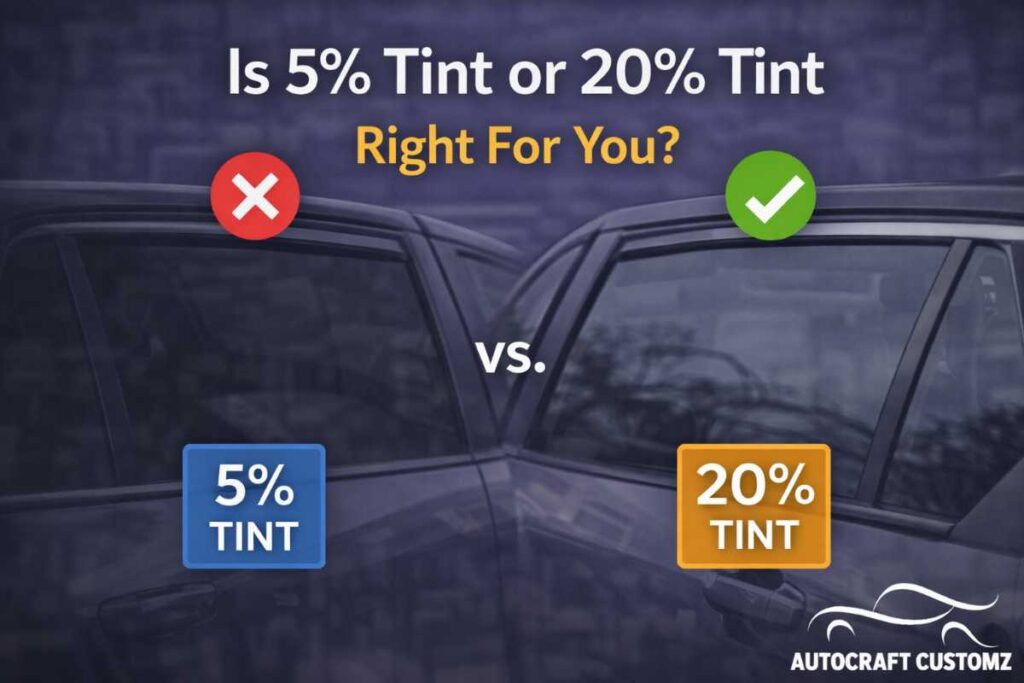
When it comes to window tinting your vehicle, one of the biggest questions drivers face is: “Should I go for 5% tint or 20% tint?” The decision isn’t just about style — it affects privacy, UV protection, visibility, and legality. Choosing the wrong shade can result in traffic citations or unsafe driving conditions.
In this comprehensive 2026 guide, we’ll break down the differences between 5% and 20% tint, explore the benefits and drawbacks of each, explain Washington State legality, and help you decide which tint is right for your car, truck, or SUV.
Whether you live in Washington or anywhere else in the U.S., this guide ensures you make an informed decision.
Understanding Window Tint Percentages
Window tint is measured using Visible Light Transmission (VLT), which refers to the percentage of visible light allowed to pass through your window.
- Higher VLT (%) = Lighter tint
- Lower VLT (%) = Darker tint
| Tint Shade | VLT % | Description |
|---|---|---|
| 5% Tint | 5% VLT | Extremely dark, “limo” tint, blocks 95% of light |
| 20% Tint | 20% VLT | Very dark, blocks 80% of light, aggressive look |
| 24% Tint | 24% VLT | Dark but legal for most vehicles in Washington |
| 35% Tint | 35% VLT | Medium tint, noticeable but subtle |
Both 5% and 20% tints fall on the dark end of the spectrum, but their impact on privacy, visibility, and legality is very different.
5% Tint: Pros and Cons
Pros:
- Maximum Privacy: Hardly anyone can see inside your car. Ideal for SUVs, trucks, or luxury vehicles.
- Superior UV Protection: Blocks nearly 100% of harmful UV rays.
- Heat Reduction: Extremely effective at keeping the interior cool on sunny days.
Cons:
- Visibility Issues: At night or in low-light conditions, 5% tint can significantly reduce driver visibility, increasing accident risk.
- Legal Restrictions: In Washington, 5% tint is illegal for all passenger vehicle windows except for certain limousines. Drivers risk fines and “fix-it” tickets.
- Potential Safety Risks: Law enforcement may have difficulty seeing inside the vehicle during traffic stops.
5% tint is ideal only in specific vehicles and situations — usually limousines, show cars, or vehicles in states with more lenient rear-window laws. For most passenger cars, it is too dark to be legal or safe.
20% Tint: Pros and Cons
Pros:
- Aggressive, Stylish Look: Dark enough to give your car a sleek, custom appearance.
- High Privacy: Prevents most passersby from seeing inside the vehicle.
- Effective Heat and UV Block: Offers substantial protection without being as extreme as 5% tint.
- Partial Legality in Some Vehicles: In Washington, 20% tint is illegal on front side windows but may be allowed on rear windows for SUVs and trucks.
Cons:
- Front Window Restrictions: Cannot legally be used on front side windows for most passenger vehicles.
- Moderate Nighttime Visibility Reduction: Dark, but not as extreme as 5%; still requires careful night driving.
- May Require Professional Installation: Dark tints need accurate measurement to stay within legal limits.
20% tint strikes a balance between privacy, style, and functionality, making it a popular choice for rear windows or vehicles with flexible rear tint laws.
Washington State Window Tint Laws (2026)
Before choosing 5% or 20% tint, it’s critical to understand Washington State law:
- Front Side Windows: Must allow at least 24% VLT
- Rear Side Windows: Must allow at least 24% VLT (some SUVs/trucks may go darker)
- Rear Window: Must allow at least 24% VLT (darker tint for SUVs/trucks permitted)
- Windshield: Only top 6-inch strip can be tinted
Key takeaway:
- 5% tint → illegal for nearly all windows
- 20% tint → illegal for front side windows, legal for rear windows in larger vehicles
Staying within legal limits ensures you avoid fines, “fix-it” tickets, and mandatory tint removal.
Comparing 5% vs 20% Tint Side by Side
| Feature | 5% Tint | 20% Tint |
|---|---|---|
| Privacy | Maximum | High |
| UV Protection | Nearly 100% | 99%+ |
| Heat Reduction | Maximum | High |
| Night Visibility | Poor | Moderate |
| Legal for Front Windows (WA) | No | No |
| Legal for Rear Windows (SUV/Truck) | Limited | Yes |
| Aesthetic Impact | Extreme dark look | Dark, sleek look |
Tips for Choosing the Right Tint
- Consider Your Vehicle Type: Sedans and small cars have stricter front and rear tint rules than SUVs and trucks.
- Check Local Laws: Laws vary by state and city — Auburn and Seattle may have different enforcement than rural areas.
- Evaluate Nighttime Driving: If you frequently drive at night, avoid extremely dark tints.
- Consider Professional Installation: Ensures accurate VLT and compliance with state law.
- Factor in Privacy vs Safety: Darker tint increases privacy but can reduce visibility.
Benefits of Professional Tint Installation
Professional installers provide:
- Accurate measurement of VLT
- Flawless application with no bubbles or peeling
- Compliance with 2026 Washington State tint laws
- Long-lasting, high-quality finish
Even small differences in tint percentage can make the difference between legal and illegal — professionals ensure your car looks great and stays compliant.
Final Verdict: 5% or 20% Tint?
- 5% Tint: Extreme darkness, maximum privacy, illegal for most passenger vehicles — use only for special circumstances or show cars.
- 20% Tint: Dark, stylish, high privacy, partially legal for rear windows — safer and more practical for daily drivers in Washington.
For most drivers in Washington, 20% tint is the better balance between style, privacy, and legality, especially when applied to rear windows of SUVs and trucks.
Ready for Legal, Stylish Tint?
At AutoCraft Customz, we specialize in professional, law-compliant window tinting. Our team ensures your vehicle receives the perfect tint that maximizes privacy, UV protection, and style while staying within Washington’s 2026 legal limits.