
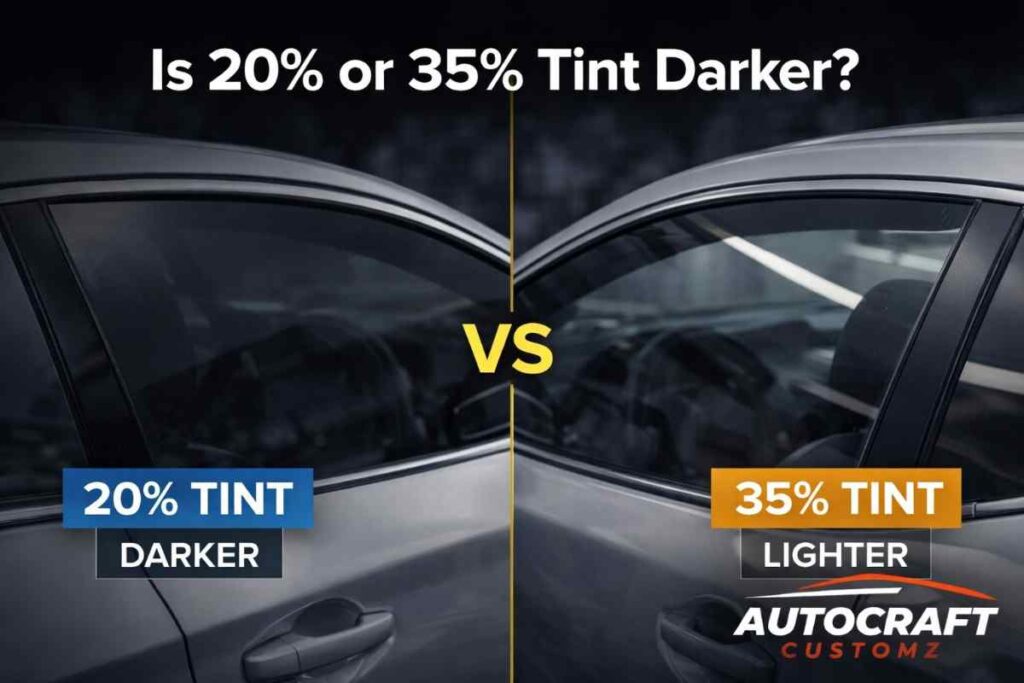
If you’re planning to tint your car windows, one of the most common questions you’ll hear is:
Is 20% or 35% tint darker?
The short answer is 20% window tint is significantly darker than 35% tint. However, choosing the right tint isn’t just about appearance. Your decision should also consider visibility, privacy, heat rejection, driving comfort, local tint laws, and the type of window film you choose.
At Autocraft Customz in Auburn, WA, we’ve installed window tint on everything from daily commuters and luxury SUVs to Teslas and performance vehicles. One of the most frequent questions we receive is whether customers should choose 20% or 35% tint. This guide compares both options using real-world driving experience so you can confidently choose the right shade for your vehicle.
Quick Answer
If you’re in a hurry, here’s what you need to know:
| Feature | 20% Tint | 35% Tint |
|---|---|---|
| Darkness | ⭐⭐⭐⭐⭐ | ⭐⭐⭐ |
| Privacy | Excellent | Good |
| Night Visibility | Fair | Excellent |
| Heat Rejection* | Depends on film type | Depends on film type |
| Factory Appearance | No | Yes |
| Daily Driving | Good | Excellent |
| Legal Compliance | More restrictions | More commonly legal |
Winner for everyday drivers: 35% Tint
Winner for maximum privacy: 20% Tint
*Heat rejection depends more on whether the film is ceramic, carbon, or dyed—not just the darkness.
Understanding Window Tint Percentages (VLT Explained)
Window tint darkness is measured using Visible Light Transmission (VLT). VLT represents the percentage of visible light that passes through your vehicle’s windows.
- 20% Tint: Allows only 20% of outside light inside the vehicle.
- 35% Tint: Allows 35% of visible light inside.
This means:
- Lower VLT = Darker Tint
- Higher VLT = Lighter Tint
So yes, 20% tint is noticeably darker than 35% tint.
What Does 20% Tint Look Like?
20% tint is often referred to as the “limo-style” look, although true limousine tint is usually 5%.
From the outside:
- Difficult to see passengers
- Aggressive, sporty appearance
- Excellent daytime privacy
From the inside:
- Visibility during the day remains good.
- Night driving becomes slightly more challenging, especially on poorly lit roads.
Advantages of 20% Tint
✔ Excellent privacy
✔ Blocks glare effectively
✔ Sporty appearance
✔ Great for rear windows
✔ Helps reduce interior fading
Disadvantages
✖ Reduced nighttime visibility
✖ May not be legal on front windows in many states
✖ Can attract more attention from law enforcement if installed improperly
What Does 35% Tint Look Like?
35% tint offers a balanced appearance that many manufacturers and dealerships prefer.
It darkens your windows enough to improve privacy while still maintaining excellent visibility.
From the outside:
- Clean factory-style appearance
- Professional look
- Moderate privacy
From the inside:
- Excellent daytime visibility
- Comfortable nighttime driving
- Easier lane changes and parking
Advantages of 35% Tint
✔ Great everyday visibility
✔ More likely to comply with local tint regulations
✔ Professional appearance
✔ Excellent for daily commuters
✔ Better nighttime confidence
Disadvantages
✖ Slightly less privacy than 20%
✖ Passengers may still be visible in bright daylight
Side-by-Side Comparison: 20% vs 35% Tint
| Feature | 20% Tint | 35% Tint |
| Appearance | Very Dark | Medium Dark |
| Privacy | ⭐⭐⭐⭐⭐ | ⭐⭐⭐ |
| Heat Reduction | ⭐⭐⭐⭐ | ⭐⭐⭐⭐ |
| UV Protection | ⭐⭐⭐⭐⭐ | ⭐⭐⭐⭐⭐ |
| Night Visibility | ⭐⭐ | ⭐⭐⭐⭐⭐ |
| Factory Look | No | Yes |
| Daily Driving | Good | Excellent |
| Police Attention | Higher | Lower |
Is 20% Tint Too Dark?
Not necessarily.
Many drivers love 20% tint because of its sleek appearance and increased privacy. However, if you frequently drive at night or in rainy conditions, it may reduce visibility enough to become inconvenient.
If your vehicle already has factory privacy glass, adding 20% film can make the windows appear even darker.
For many customers, we recommend using:
- 35% on front windows
- 20% on rear windows
This combination provides privacy while maintaining safe visibility.
Is 35% Tint Dark Enough?
Absolutely.
35% tint remains one of the most popular choices because it strikes an excellent balance between appearance and practicality.
It’s dark enough to:
- Reduce glare
- Improve cabin comfort
- Enhance vehicle appearance
- Add moderate privacy
Yet it’s light enough for comfortable nighttime driving.
If you’re unsure which shade to choose, 35% is generally the safest all-around option.
Which Tint Is Better for Daily Driving?
If your vehicle is your daily commuter, 35% generally offers the best experience.
Reasons include:
- Easier night driving
- Better visibility in the rain
- Professional appearance
- Reduced the chance of legal issues
- Comfortable for long trips
20% is still an excellent option if privacy is your highest priority.
Does Darker Tint Block More Heat?
This is one of the biggest misconceptions.
Darker does NOT automatically mean cooler.
Heat rejection depends primarily on the type of film.
For example:
Ceramic Window Tint
- Blocks infrared heat
- Rejects up to 90%+ IR heat (depending on product)
- Excellent UV protection
- Doesn’t interfere with electronics
Carbon Tint
- Good heat rejection
- Fade resistant
- Matte appearance
Dyed Tint
- Mainly improves appearance
- Less effective at blocking heat
A high-quality 35% ceramic tint can outperform a cheap 20% dyed tint in keeping your vehicle cooler.
Learn how to select the best film type here:👉 How to Choose the Right Type of Window Tint for Your Car, Home, or Office
Best Tint for Different Vehicles
Sedans
Recommended:
- 35% all around
- 20% rear windows
SUVs
Recommended:
- 20% rear
- 35% front
Pickup Trucks
Many truck owners prefer:
- 35% front
- 20% rear
Tesla
Tesla owners often choose ceramic tint due to the large glass roof and increased cabin heat.
35% ceramic provides excellent comfort while maintaining visibility.
Window Tint Laws You Should Know
Window tint laws vary by state and by window position.
Some states allow darker rear windows while requiring lighter front windows.
Before choosing a tint percentage, always make sure it complies with your local regulations.
At Autocraft Customz, we help customers select window films that balance appearance, performance, and legal compliance.
If your tint is already too dark or failing inspection, it may be time for replacement:👉 5 Signs It’s Time to Replace Your Car Window Tint (and What You’ll Gain)
So… Is 20% or 35% Tint Better?
After installing thousands of window tint packages, here’s what we generally recommend:
Choose 35% Tint if you:
- Drive every day
- Frequently drives at night
- Want a factory-style appearance
- Prefer balanced visibility
- Want fewer legal concerns
Choose 20% Tint if you:
- Are tinting rear windows
- Want maximum privacy
- Prefer a darker appearance
- Mostly drive during daylight
- Want a sportier look
Need Professional Window Tinting in Auburn, WA?
Choosing between 20% and 35% tint doesn’t have to be confusing.
Our experienced team at Autocraft Customz can help you compare different shades, explain local tint regulations, and recommend the best ceramic, carbon, or dyed window film for your vehicle.
Whether you drive a sedan, truck, SUV, or Tesla, we’ll help you achieve the perfect combination of style, comfort, privacy, and protection.
👉 Car Window Tinting in Auburn, WA
Contact Autocraft Customz today for a free estimate and let our experts help you choose the perfect window tint for your vehicle.